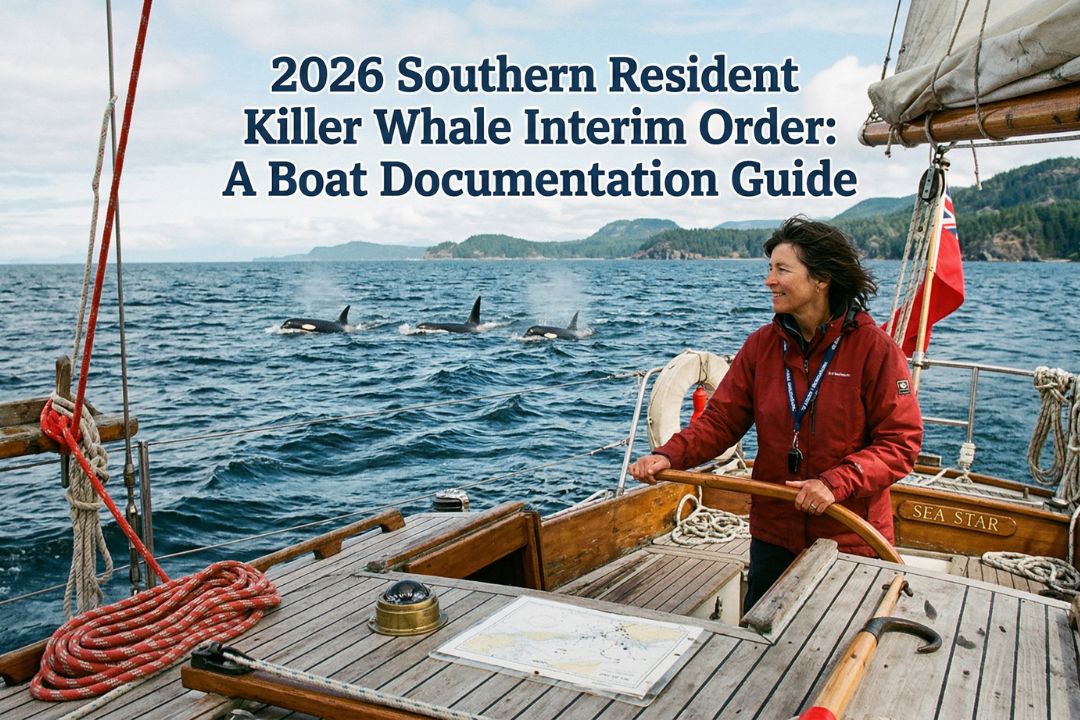
British Columbia boaters are entering a new regulatory landscape shaped by enhanced protections for endangered marine wildlife. The 2026 Southern Resident Killer Whale Interim Order introduces significant changes that directly affect how you operate your boat in certain coastal waters. Announced by the Government of Canada, these measures are designed to reduce disturbances to Southern Resident killer whales while preserving safe and compliant boating practices.
For those navigating BC waters, staying aligned with these rules is not optional. It intersects directly with your obligations as a registered boat owner, especially when traveling through monitored zones or crossing into international waters.
While you ensure your on-water vessel documentation is up to date with these new whale protection zones, don’t forget that having a current Canadian boat registration is your best protection against fines and identity issues in international waters.
What is the 2026 Southern Resident Killer Whale Interim Order?
The 2026 Southern Resident Killer Whale Interim Order is a set of federal rules introduced by the Government of Canada to better protect endangered whales in BC waters. It establishes stricter limits on how boats can operate near key habitats.
What is the new minimum distance from killer whales?
Boaters must now stay at least 1,000 metres away from Southern Resident killer whales. This expanded buffer helps reduce noise and physical disturbance in their environment.
2026 Southern Resident Killer Whale Interim Order Updates Every BC Boater Needs to Know
The 2026 Southern Resident Killer Whale Interim Order introduces stricter measures than previous years. These changes are not subtle—they redefine distances, speeds, and access in several high-traffic marine areas.
3 Major Changes for 2026
- The minimum approach distance has expanded significantly, creating a much larger buffer zone around whales
- Speed restrictions now apply in defined feeding areas near Swiftsure Bank
- Seasonal sanctuary zones restrict boat access entirely in specific regions near Pender Island and Saturna Island
Each of these changes has direct implications for how you plan routes, operate your boat, and maintain compliance documentation.
The 1,000 Metre Rule: Expanding the Safety Buffer
One of the most impactful elements of this order is the expanded approach distance. Previously set at 400 metres, the new requirement mandates that all boaters maintain a minimum distance of 1,000 metres from Southern Resident killer whales.
This shift reflects growing concerns about noise pollution, physical disruption, and feeding interference. For boaters, it introduces a much larger margin that must be factored into navigation decisions.
What this means in practice:
- You must alter your course well in advance if whales are sighted
- Fishing or recreational activities may need to pause or relocate
- Navigation systems and charts should be updated to reflect safe distances
Maintaining compliance with this rule is essential, especially in high-traffic corridors where whales are frequently observed.
Where do speed limits apply under the new rules?
Speed restrictions apply in two designated zones near Swiftsure Bank. Boats must not exceed 10 knots over ground speed in these areas to minimize underwater noise and collision risks.
Are there areas where boats are completely restricted?
Yes, sanctuary zones off Pender Island and Saturna Island prohibit most boat traffic from June 1 to November 30, 2026. These zones are designed to give whales uninterrupted space for feeding and socializing.
What happens if I don’t comply with the rules?
Non-compliance can result in administrative monetary penalties of up to $250,000. Keeping your documentation current and following all operational rules helps reduce your risk of fines and enforcement actions.
Speed Restrictions Near Swiftsure Bank
The 2026 Southern Resident Killer Whale Interim Order also introduces strict speed limits in two designated zones near Swiftsure Bank. Boats must not exceed 10 knots over ground speed within these areas.
These zones are known feeding grounds for Southern Resident killer whales. Slower speeds reduce underwater noise and decrease the likelihood of collisions.
Boaters should be aware of the following:
- Speed applies regardless of boat size or activity
- GPS-based speed readings are the standard for enforcement
- Enforcement patrols may be active throughout the season
Operating within these limits requires careful monitoring of your speed and surroundings. Even minor deviations can lead to penalties.
Sanctuary Zones Off Pender and Saturna Islands
Another major component of the order is the implementation of Vessel Restricted Zones. These sanctuary areas are located off Pender Island and Saturna Island and are in effect from June 1 through November 30, 2026.
Within these zones:
- Boat traffic is prohibited, with limited exceptions
- Fishing, cruising, and recreational activities are restricted
- Entry is only allowed under specific exemptions
These sanctuary zones are designed to provide uninterrupted habitat for feeding and socializing. For boaters, this means route planning must be adjusted well in advance to avoid restricted areas.
The Fine Print: Penalties and Enforcement
Compliance with the 2026 Southern Resident Killer Whale Interim Order is enforced through substantial penalties. Administrative monetary penalties can reach up to $250,000 for violations.
This level of enforcement highlights how seriously these protections are being treated. Boaters must be proactive in ensuring they meet all requirements.
Potential consequences include:
- Significant financial penalties
- Legal complications for repeat violations
- Increased scrutiny during inspections
Maintaining proper documentation and awareness is one of the most effective ways to reduce risk.
How Proper Documentation Supports Compliance
Navigating regulatory changes like this order goes beyond knowing the rules. Your documentation plays a central role in demonstrating compliance and avoiding complications during inspections.
Through our service, we make it easier to access the forms needed for:
- Transport Canada boat registration
- Ownership updates and changes
- Official record maintenance
Having your registration properly documented ensures that your boat is recognized and compliant when operating in regulated waters.
Pleasure Craft Licence Requirements in Protected Waters
For many recreational boaters, holding a valid pleasure craft licence is essential. While this order focuses on operational rules, enforcement officers may also verify your licencing status during routine checks.
Considerations include:
- Displaying your licence number clearly on your boat
- Ensuring your licence information is current
- Keeping records aligned with your ownership details
Our platform allows you to access the necessary forms to maintain or update your licencing status efficiently.
Small Vessel Register and Operational Clarity
For boats that fall under commercial or more complex ownership structures, the small vessel register provides a different framework than standard licencing. The 2026 Southern Resident Killer Whale Interim Order does not distinguish between registration types when it comes to compliance, but your documentation still matters.
Benefits of maintaining accurate registration include:
- Clear ownership identification
- Easier navigation of cross-border requirements
- Reduced complications during inspections
We provide streamlined access to the forms needed to maintain your standing within the appropriate registry.
Managing a Pleasure Craft Licence Transfer
Ownership changes can introduce unexpected complications, particularly during a regulatory shift like this. A pleasure craft licence transfer must be handled promptly to ensure compliance.
Important points to keep in mind:
- Transfers should be completed as soon as ownership changes
- Outdated licence information can lead to enforcement issues
- Accurate records help avoid disputes or penalties
Our service simplifies access to the transfer forms, allowing you to keep your documentation aligned with current ownership.
Planning Your Routes Around Protected Areas
The introduction of expanded zones under this order means route planning has become more critical than ever. Boaters must now account for:
- Larger avoidance distances
- Seasonal access restrictions
- Speed-controlled areas
Practical strategies include:
- Reviewing updated marine charts before departure
- Using GPS tools to monitor restricted zones
- Adjusting travel times to accommodate slower speeds
Being prepared reduces the likelihood of accidental violations and enhances overall safety on the water.
Staying Ahead of Regulatory Changes
Marine regulations are constantly evolving, and this order is a clear example of how quickly requirements can shift. Staying informed is essential for maintaining compliance and protecting your ability to operate freely.
Ways to stay updated include:
- Monitoring official government announcements
- Reviewing seasonal boating advisories
- Ensuring your documentation remains current
Our platform supports your ability to adapt by providing consistent access to the forms you need, whenever requirements change.
Supporting Responsible Boating Through Compliance
The broader goal of this order is to protect a critically endangered species while allowing responsible boating to continue. Compliance is not just about avoiding penalties—it contributes to the preservation of marine ecosystems.
As a boater, your role includes:
- Respecting distance and speed limits
- Avoiding restricted zones
- Maintaining accurate and up-to-date documentation
By aligning your practices with these expectations, you help create a safer environment for both marine life and fellow boaters.
Accessing the Forms You Need Through Our Platform
Adapting to the 2026 Southern Resident Killer Whale Interim Order requires more than awareness—it requires readiness. Our service is designed to simplify your access to essential documentation processes.
We make it easier to:
- Apply for Transport Canada boat registration
- Maintain accurate records for your boat
- Complete updates and changes as needed
Everything is structured to provide a straightforward way to manage your documentation without unnecessary delays.
Enjoying Nature the Right Way
British Columbia’s coastal waters remain one of the most remarkable boating environments in the world. With the introduction of the 2026 Southern Resident Killer Whale Interim Order, they are also among the most carefully regulated.
By combining responsible boating practices with properly maintained documentation, you position yourself to navigate these waters confidently. Every adjustment—from maintaining a 1,000 metre distance to respecting sanctuary zones—becomes part of a broader commitment to compliance and conservation.
Our role is to ensure you have access to the forms required to stay aligned with these expectations, so you can focus on operating your boat safely, legally, and responsibly.