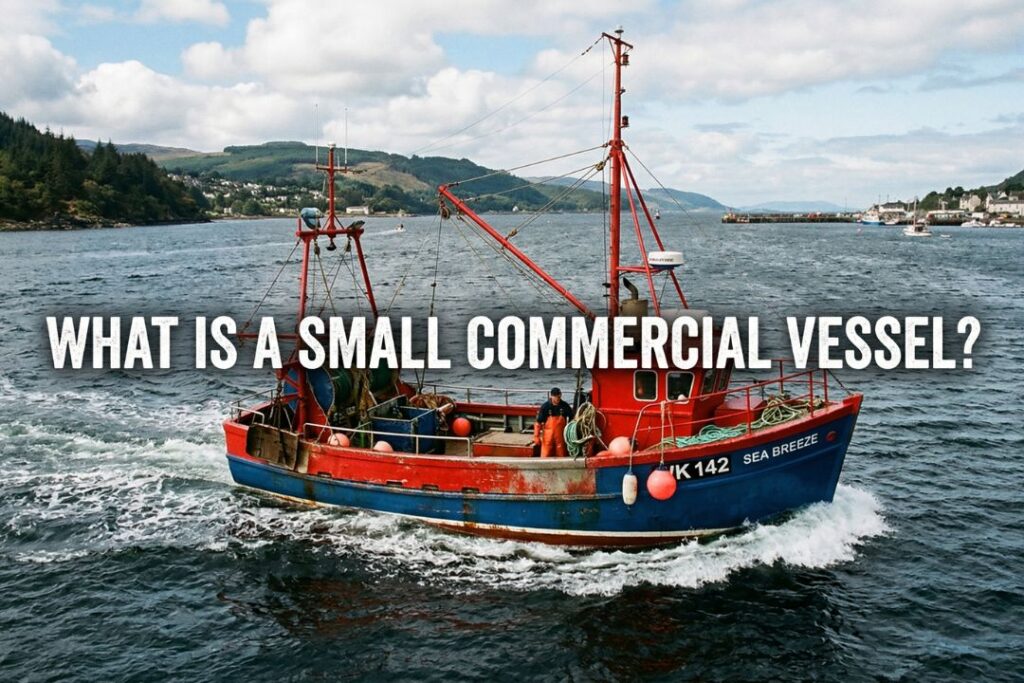
A small commercial vessel is a boat used for business or income-generating purposes that meets specific size and operational criteria set by Canadian maritime regulations. In most cases, this refers to boats that are not large enough to fall under major commercial shipping classifications but are still actively used for work such as transporting passengers, guiding tours, fishing, or providing services on the water.
These boats must follow Transport Canada regulations regarding safety, registration, and operation, even if they are smaller in size than larger commercial ships.
How Is a Small Commercial Vessel Defined in Canada?
In Canada, classification depends on how a boat is used rather than simply its size. A boat becomes commercial when it is used for financial gain or business activity.
Characteristics include:
- It is used to carry passengers for hire or reward
- It is used for commercial fishing or charter operations
- It supports business activities such as marine construction or water taxis
- It may be under a certain length threshold, often less than 24 meters
The official legal framework for these classifications can be found in Canadian law.
What Types of Boats Fall Into This Category?
A wide range of boats can be classified as a small commercial vessel depending on their use.
Examples include:
- Charter fishing boats
- Whale watching or sightseeing boats
- Water taxis and ferries operating on a smaller scale
- Workboats used in construction, maintenance, or marine services
- Small cargo or transport boats
Even if a boat looks similar to a recreational craft, its use in a business context changes its classification.
How Does It Differ From Recreational Boats?
The main difference lies in purpose and regulation. Recreational boats are used strictly for personal enjoyment, while commercial boats are tied to business activities.
Important distinctions include:
- Recreational boats may operate under a pleasure craft licence
- Commercial boats must meet stricter safety and inspection standards
- Commercial operations often require additional certifications for operators
- Insurance and liability requirements are typically higher for commercial use
A pleasure craft licence does not replace the need for proper commercial registration when a boat is used for business purposes.
Registration Requirements for Small Commercial Boats
If you operate a small commercial vessel, proper registration is not optional. It is a legal requirement under Canadian maritime law.
Registration ensures:
- Your boat is officially recognized for commercial use
- Ownership is documented and traceable
- You meet national compliance standards
- You can legally operate in commercial waters
We simplify access to the forms needed for the “Large Vessel Registry” or Canada boat registration.
When Does a Boat Need to Be Registered?
A boat must be registered when it is used commercially, regardless of its size in many cases.
Situations where registration is required include:
- Carrying passengers for payment
- Operating as part of a charter or tour business
- Engaging in commercial fishing
- Providing marine services such as towing or maintenance
Even smaller boats that might otherwise qualify for recreational licensing must transition to proper commercial registration when used for business.
Safety Standards for Small Commercial Boats
Operating a small commercial vessel comes with safety obligations that go beyond those for recreational use.
These may include:
- Mandatory safety equipment on board
- Regular inspections and maintenance
- Compliance with Transport Canada safety regulations
- Proper training and certification for operators
These standards are in place to protect both passengers and crew while ensuring safe operations on Canadian waters.
How We Help With Registration and Compliance
Our service focuses on making the process more efficient by providing access to the official forms required for compliance.
We assist by:
- Offering streamlined access to registration forms
- Helping you complete submissions online
- Reducing confusion around regulatory requirements
- Supporting applications for updates or changes
Whether you are registering a new small commercial vessel or updating existing records, we provide a more accessible way to handle the process.
Can a Recreational Boat Become Commercial?
Yes, a recreational boat can transition into a small commercial vessel if its use changes.
This typically happens when:
- The owner begins offering paid services
- The boat is used for guided tours or charters
- It becomes part of a business operation
At that point, the boat must meet commercial standards and be properly registered.
What About Ownership Changes?
Ownership changes require official updates to registration records.
This includes:
- Selling a commercially used boat
- Transferring ownership within a business
- Updating ownership due to legal or financial changes
We make it easier to complete a small boat registration transfer by providing the necessary forms and a simplified submission process.
Renewal and Ongoing Compliance
Maintaining compliance is not a one-time task. Registration must be kept up to date.
Ongoing requirements may include:
- Updating ownership or operational details
- Renewing registration as needed
- Ensuring continued compliance with safety standards
We support small boat registration renewal by offering direct access to the required forms, helping you stay current without unnecessary complications.
Are There Size Limits for Small Commercial Boats?
While “small” suggests a size limitation, the classification is more nuanced.
General guidelines include:
- Often under 24 meters in length
- Smaller crew and passenger capacity
- Simpler operational scope compared to large commercial ships
However, the defining factor remains how the boat is used rather than its exact dimensions.
Do Operators Need Special Certification?
Yes, operating a small commercial boat often requires certification.
Depending on the type of operation, this may include:
- Marine safety training
- Navigation certification
- Passenger safety and emergency response training
These requirements ensure that operators are prepared to handle real-world conditions safely and responsibly.
What Happens If You Don’t Register Properly?
Failing to properly register a commercial boat can lead to serious consequences.
Potential issues include:
- Fines or penalties
- Restrictions on operation
- Legal liability in case of accidents
- Difficulty obtaining insurance
Proper registration protects both your business and your ability to operate legally.
How Long Does the Registration Process Take?
The timeline can vary depending on several factors.
These include:
- Accuracy of submitted information
- Type of commercial operation
- Volume of applications being processed
Using an online service to access and submit forms can help reduce delays and improve efficiency.
Can You Operate Internationally With a Small Commercial Boat?
In some cases, yes. However, additional requirements may apply.
Considerations include:
- Compliance with international maritime regulations
- Proper documentation and registration
- Customs and border requirements
Registration plays a role in ensuring your boat is recognized beyond Canadian waters.
What Documents Are Typically Required?
While specific requirements vary, common documentation includes:
- Proof of ownership
- Identification of the owner or business
- Details about the boat’s specifications
- Information about its intended use
We focus on providing access to the correct forms so you can complete these requirements efficiently.
How Does This Affect Insurance?
Insurance providers often require proof that your boat is properly classified and registered.
This can impact:
- Coverage eligibility
- Premium rates
- Liability protection
Operating as a small commercial vessel without proper registration may limit your insurance options.
We provide the tools you need to move forward with confidence by offering easy access to the required forms for compliance and registration.